
Finding Newburgh Residents
A Newburgh residents directory search goes smoothly when you pair the detail you already have with the office that keeps it. Each record answers a different question. A current street address points toward a parcel roll or a map layer. A name fits a court party index or a voter registration tool with required fields. Older households show up best in directory books and archive shelves. You can even find who lives on a street in Newburgh. Just combine a few of these sources. Keep the City of Newburgh and the Town of Newburgh separate. Note the date of every result. Label each name as an owner, a mailing recipient, or a listed household member so the record stays honest.
- Confirm whether the address belongs to the City of Newburgh, then note the street spelling, unit, ZIP, and parcel number when shown.
- Use the City Assessor record for a dated owner and situs-address lead, then view the same parcel in the county GIS.
- Use the official voter lookup only when its county, name, date-of-birth, and ZIP requirements fit a lawful purpose.
- For a recorded transfer, use the deed book and page as an entry point to the Orange County Clerk index.
- For a past household, ask the library or Historical Society for the relevant directory, telephone-book, map, or clipping collection.
Note: A missing result may mean a city-town mismatch, an index limit, a protected record, or the wrong record keeper.
Newburgh City and Town Records
Writing "Newburgh, NY" is not enough to route a record. The City of Newburgh runs through City Hall at 83 Broadway. It has its own assessor, clerk, court, wards, and records access route. The Town of Newburgh keeps a different court and different municipal offices. Even so, a mailing label may look identical. Goshen, the county seat, holds county records at the County Clerk and several courts. Never send a city address to a town custodian just because both share the Newburgh name.
The distinction plays out in practice. City assessment records sit with the City Assessor and its PROS portal. The county's Image Mate notice states that its weekly public feed leaves out current city assessment records. A City Court search and a Town Court inquiry also land in different places. Keep the jurisdiction visible in every note, request, and saved record.
Newburgh Parcel Record Clues
The City of Newburgh Assessor maintains more than 6,900 properties. The office also links to the city's PROS assessment system. The dated city rolls and the portal cover an owner-of-record, situs address, mailing address, class, assessed or full-market value, exemption flag, and former-address text. They also carry a deed book or page. Those fields serve tax administration. They do not prove that an owner lives on the site. Nor do they prove that a mailing recipient or a corporate officer does.
The city's assessment page links to the Newburgh PROS assessment search. Type the exact spelling from the record, especially when a roll carries a former-address notation. The County GIS is the next check for a mapped parcel. Its geometry is not a title opinion or a legal survey. Keep the current city portal and a dated roll distinct from the county feed.
The city assessor page displayed here is the source for the Newburgh parcel route.
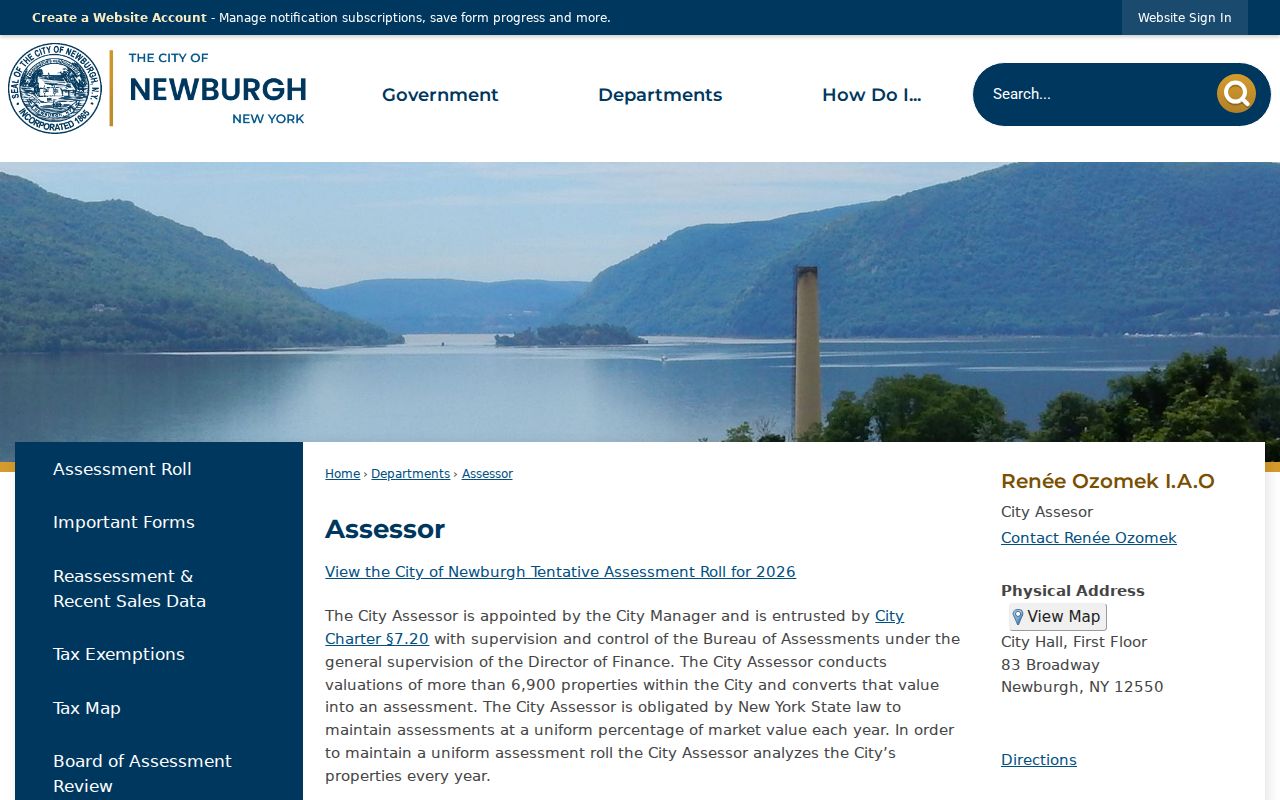
The page ties an address-led Newburgh residents search to the city source rather than the county feed that excludes current city assessment data.
| PROS or roll field | What it identifies | How to treat it |
|---|---|---|
| Owner and mailing address | Assessment role and mail destination | Not proof of occupancy |
| Situs and parcel or print key | The assessed property | Use to match GIS geometry |
| Former-address text | A possible earlier address string | Check with maps, deeds, and directories |
| Deed book and page | Lead to a recorded instrument | Retrieve and read the actual deed |
Newburgh Resident Records Offices
Several offices hold the records behind a Newburgh residents search. The City Assessor keeps city assessment material. The Orange County Clerk and Record Room holds deeds, mortgages, maps, judgments, liens, historical books, and copy-request routes. The Orange County Board of Elections handles local registration help, while the state voter tool carries its own public information limits. The City Clerk routes municipal records and city FOIL requests. Each office answers a narrower question than a general people search.
Orange County Clerk / Record Room
255 Main Street
Goshen, NY 10924
845-291-2690
City records that are not online can be requested through the Newburgh FOIL route. The request should be written. It should name the municipality, the address or parcel when known, the record type, and the date range. New York's Freedom of Information Law sits in Public Officers Law Article 6, sections 84 through 90. Agencies generally acknowledge a request within five business days. They then give a reasonable response date or explain any longer delay.
Newburgh Address Record Roles
One parcel in Newburgh can carry three distinct addresses. The situs address marks the assessed land or building. The mailing address shows where the assessor sends notices. The legal description governs what the recorded deed conveys. A PO Box in a mailing field is never the parcel itself, and a city plus ZIP proves nothing about municipal jurisdiction. Read each field as printed and resist collapsing them into a single "resident address."
Former-address text in a roll deserves the same care. It can point toward a deed, map, or an older directory edition. Newburgh records no documented city-wide renumbering date. Preserve both address strings and bridge them through filed maps, the legal description, or a directory edition. The fuller address-by-address sequence sits in the Newburgh street directory.
- Parcel or PIN
- An identifier used to connect an assessed property to the GIS map layer.
- Roll
- A dated assessment list used for tax administration.
- Index
- A finding aid that points to a record, not always the complete record itself.
- Criss-cross directory
- A directory section arranged by street and address rather than only by surname.
Current Newburgh Resident Sources
No single roster builds a Newburgh residents directory. Property records supply the owner-of-record and the parcel. The voter lookup returns registration and polling details for a matching person, within election-law limits. Court indexes name parties and case status, not addresses. Business and professional filings show a license or organizational role instead. Treat any single match as one piece of evidence. Anchor it with a second independent fact, such as a middle initial, a date, an address, or a documented family relationship.
| Newburgh source | What it can confirm | Keeper | Access boundary |
|---|---|---|---|
| Assessment roll and PROS | Owner, mailing and situs clues, parcel role | City Assessor | Not occupancy proof |
| Voter lookup | Registration and polling details for a match | NY Elections / Orange BOE | Required identity fields and purpose limits |
| WebCivil index | Party role, case number, court, status | NYS Courts | Sealed and limited categories omitted |
| IQS land index | Recorded-party and instrument leads | Orange County Clerk | Subscription, image, and coverage limits |
| City directories | Historical household and address clues | Library and Historical Society | Many volumes require reference access |
Confirm before merging same-name results for one person. A Newburgh resident lookup should stay a name-to-record workflow, never letting a tax, court, or entity role stand in for present residence.
Newburgh Court and Voter Checks
NYS eCourts WebCivil Local searches local civil matters by index number, party, attorney, judge, role, court, case type, filing year, and status, with HTML or PDF output. It also returns future appearances. A hit confirms a party role and filing date. It proves nothing about motive or current residence. An empty return does not mean no case exists. Sealed matters and categories with narrow public-display windows stay excluded.
The official voter lookup demands county, first and last name, date of birth, and ZIP. It is not an open street-browse tool. Election Law section 3-103 restricts voter-data use, and confidential registration protections apply. No Newburgh residents directory can substitute it for a street list. Use a matching result only for the registration purpose. Never publish private identifiers, signatures, protected addresses, or ballot choices.
The local civil search form displays the Newburgh resident lookup fields. They come straight from the court portal.
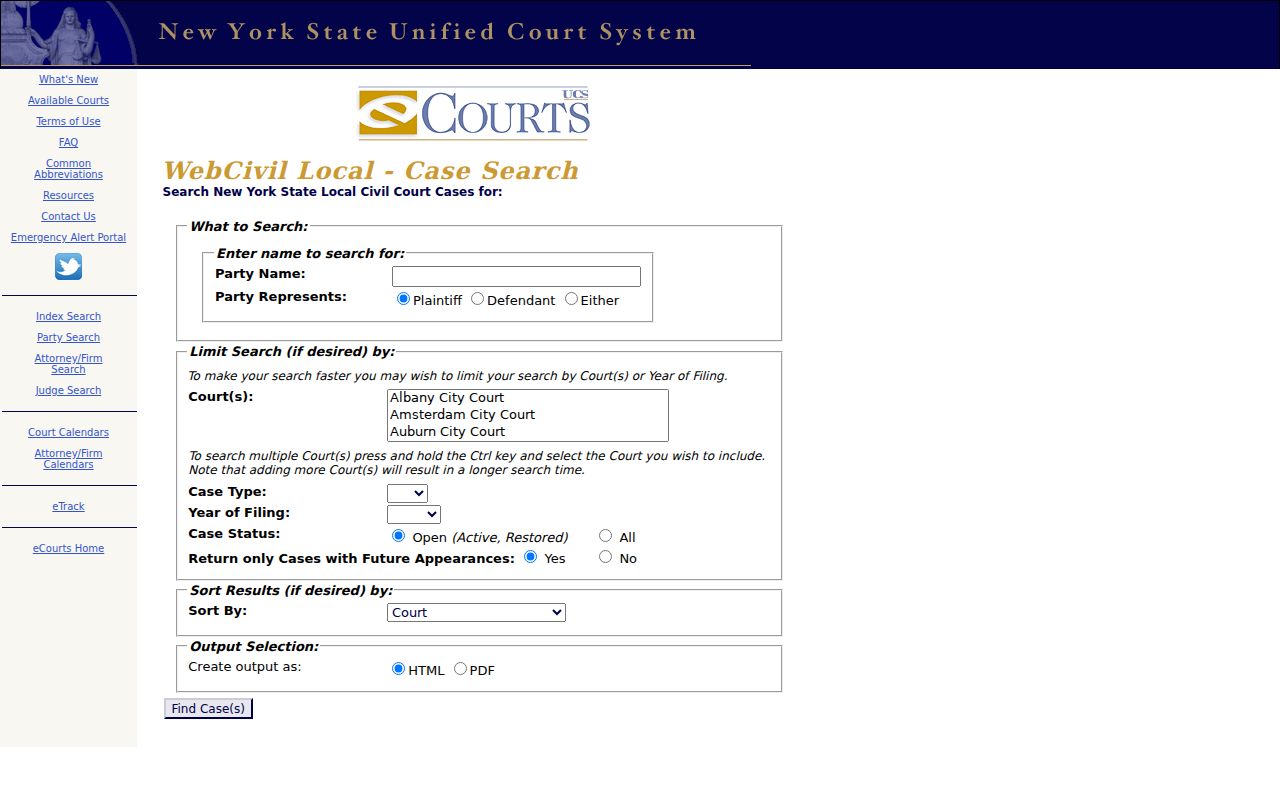
The visible court filters separate a party index from a full file. The clerk of the appropriate court keeps the complete papers. The official New York voter form supports a narrow registration check, not a block list.
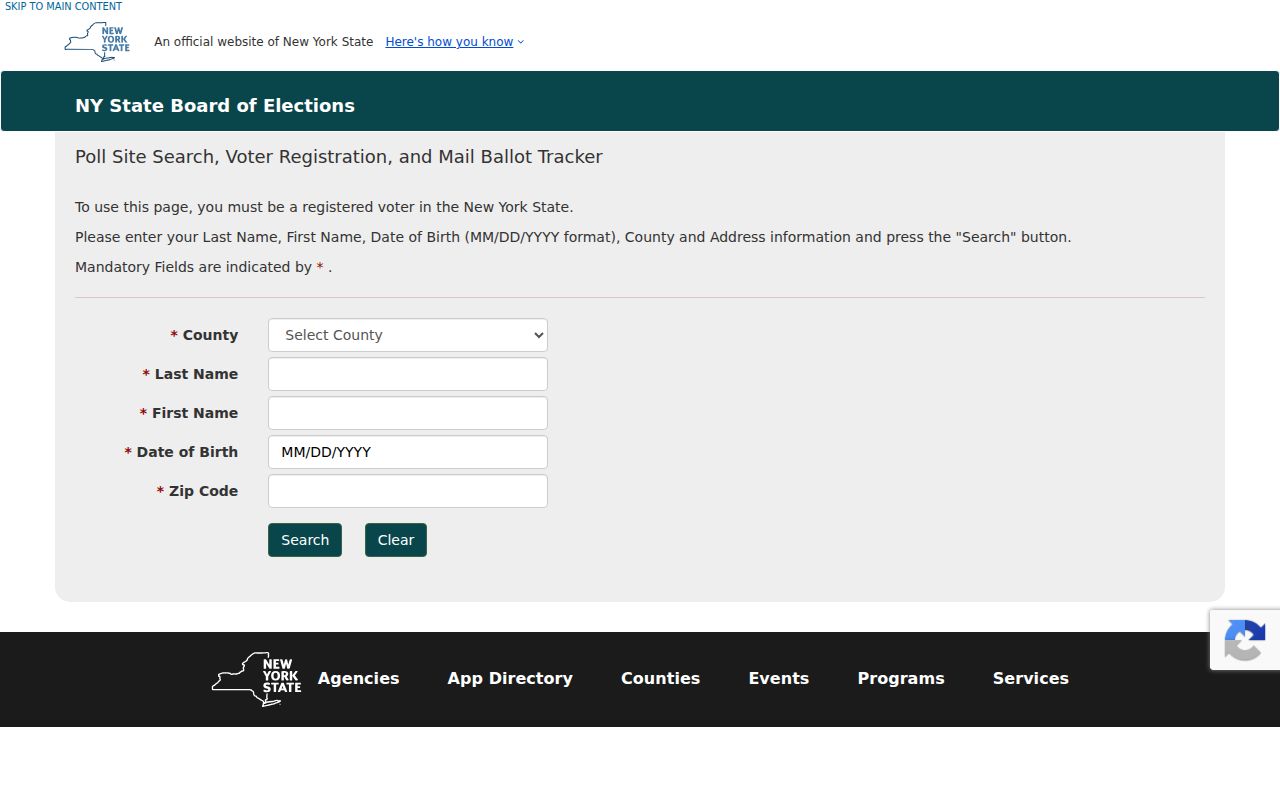
County, name, birth date, and ZIP are mandatory fields. That requirement is why an address record should never stand in for a voter-search result.
Newburgh Deed Trail Records
Begin with a dated assessment roll. The city PROS result works too. The next stop is the deed book and page. Pull the recorded instrument through Orange County IQS. Note the grantor, grantee, legal description, execution and recording dates, prior reference, and image availability. To move backward, hunt the seller or prior grantee in the earlier conveyance. Keep grantor, grantee, owner, mailing recipient, and occupant distinct.
IQS land-record coverage starts December 31, 1953. Historical grantor-grantee books span 1910 through 1977, with category-specific back-scanning under way. Where the online index ends, older county material takes over. Deed books A through 450 span 1703 through 1900. Mortgage books A through 71 run from 1703 into 1869. When an image or index result is missing, fall back on the Record Room, the historical books, and the copy-request form.
Note: A deed party ties a person to a recorded transaction, not to residence at the property.
Newburgh Directory Archives
The Newburgh Free Library Local History Resource Center keeps directories, telephone books, newspapers, maps, photographs, postcards, pamphlets, yearbooks, cemetery selections, church material, and family-history resources. Its directories reach back to the 1860s. Its phone books span the 1930s to the early 2000s. This historical side of the Newburgh residents directory happens in person or through reference staff. Ancestry Library Edition works in the library only.
The Historical Society of Newburgh collects books, documents, photos, maps, and ephemera. Its focus is local people, businesses, and architecture. The archive sits at 189 Montgomery Street. Visits require an appointment and a written research question. The city's Digital Collection adds Parish, Village, City, and Town material from 1791 into the early twentieth century. It still cannot replace a fully digitized directory run.
The assessment portal handles current parcel work. The library and archive holdings give a Newburgh residents trail its historical depth.
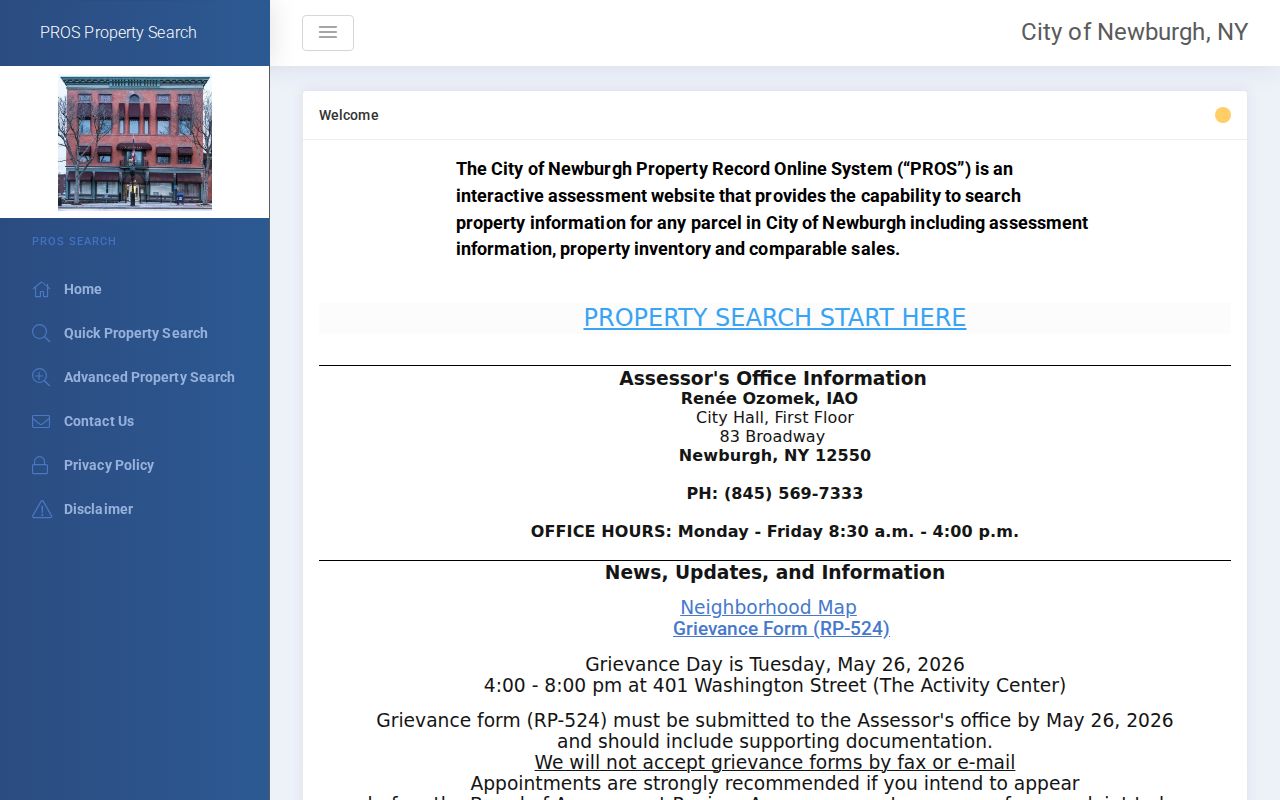
Start with a current parcel result as a dated anchor. When the question turns to a past household, move on to directories and deeds.
Historical Newburgh Resident Directories
Directory books for Newburgh reach back to the early nineteenth century. The Historical Society tracks them from that era. The library keeps a long local run of its own. The New York State Library catalog adds fiche for 1856/57, 1858-59, and 1860/61. Film copies cover many later editions through 1948. Telephone directories survive for 1940/41 and 1950/51. Not every edition carries a confirmed publisher. Check the title page or catalog entry first.
The reading method matters as much as the holdings. Before 1918, the books list names alphabetically with no address index. From 1918 onward, you can search by street address as well as surname. Copy each entry exactly as printed, including occupation, marital-status notation, and household detail. Then compare adjacent editions alongside a census, deed, obituary, or roll. The Newburgh directory book explains the holdings and the method in full.
Newburgh Census and Archive Gaps
A missing record rarely means a missing person. A 1911 fire destroyed many New York State census records, according to the Historical Society. State census material has other coverage limits too. Federal schedules open on their own public-release schedule. So one gap in one series does not prove a household was absent from Newburgh. Check county copies where they exist, plus directory editions, deeds, probate, newspapers, and the library or archive.
The record trail also spans paper, film, and online layers. The City Digital Collection covers selected materials. The Library of Congress holds a 1913 Sanborn set of 69 sheets for Newburgh. Older books sit in the county Record Room. Each layer answers a different question about a household, parcel, building, or event.
Newburgh Record Geography
Newburgh carries useful descriptive layers. The East End Historic District, the Montgomery-Grand-Liberty Street Historic District, Hillside BOA, the waterfront, the Broadway corridor, Downing Park, Washington's Headquarters, and the Heights all help orient a map. They can also steer an address-history search. None of them, though, are official municipal or neighborhood boundaries. City and town limits make far better matching fields. So do parcel geometry, a SWIS or PIN, and the custodian's jurisdiction.
ZIP codes add their own confusion. City rolls show both 12550 and 12551, while 12552 serves as an associated postal label. No city-level ZIP boundary map exists from an authoritative source. USPS notes that delivery boundaries can shift. For a postal question, confirm the returned delivery address. For a jurisdiction question, rely on the municipal boundary and the parcel record.
Note: Keep ZIP, municipality, situs, mailing address, and legal description in separate fields. Compare Newburgh records that way.
Limits That Protect Newburgh Residents
Official records are not a shortcut around private information. Vital records carry eligibility rules. Court portals omit sealed and confidential matters. Voter records come with purpose limits and confidential registration protections. New York's Address Confidentiality Program can shield an eligible participant's actual address. A responsible Newburgh residents directory therefore never copies DMV information, signatures, full dates of birth, private contact details, or protected addresses.
Commercial people-finder services pose different risks. They can mix identities, lag behind corrections, and repeat protected information. Primary custodians verify a discrete fact far better. They name the record type, date, and access limit. For a disputed item, turn to the relevant clerk, assessor, election office, library, archive, or FOIL custodian rather than publishing an unverified explanation.